Showing posts with label Punjab. Show all posts

Heer Ranjha, A true love story of Punjab

Heer Ranjha, A true Love Story of Punjab

Everyone is knows the name of  Heer Ranjha. A tragic never ending love story written by Waris Shah. It is often said that is a real love story of shah when he fell in love with a girl name Bhag Bhari. But at the same time it is said that Heer and Ranjha were real personalities who lived in lodhi dynasty.
The story begins here, Heer was a beautiful woman. She was born in a rich Rajput Family. A man named Dheedo Ranjha was a Jat of Rajput Tribe. He was the youngest among his four brothers and was his father’s favorite son. The time passes and quarrel started between brothers over land and Ranjha left his home. But according to Waris Shah his brother’s wives did not give him food so he left the home. He then came to Heer’s village and her father offered him a job of herding the cattle. Ranjha used to play Wanjhali. Heer got mesmerized by the way he played his Wanjhali and fell in love with him. Ranjha also got attracted by Heer’s beauty. Both met each other secretly for years. One day they got caught by Heer’s uncle Kaido. After that Heer was forced to get marry by her parents and family.
Ranjha is heartbroken and wanders in the countryside. He met a Jogi (ascetic) there, and he himself becomes a Jogi and reciting the name of lord he wanders here and there to find Heer. Eventually he finds the village where Heer lives. When he returns back Heer’s parents agree to their marriage. On the wedding day Heer’s uncle poison’s her food. Ranjha did everything he could do to save Heer but it was too late and she died. He ate that poisoned Laddu (sweet) too and dies beside her. Both were buried in Jhang hometown of Heer.
Many movies are also made on their love story.  Love-smitten couples and others often pay visits to their mausoleum.


Dhol , Musical Instrument of Punjab


Dhol is a traditional instrument mostly played in Punjab. It is different from drums. The structure of Dhol is like a hollow drum, The drum consists of a wooden barrel with animal hide or synthetic skin stretched over its both open ends, which cover them completely. These skins can be stretched or loosened with a tightening mechanism, using nuts and bolts. The pitch of drum can be set by tightening and losing it. The stretched skin on one of the ends is thicker and produces a deep, low frequency (higher bass) sound and the other thinner one produces a higher frequency sound.  Nowadays drums with synthetic, or plastic, treble skins are commonly used.
It is a double-sided barrel drum played mostly as an accompanying instrument in regional music forms. The Dhol is played using one or two wooden sticks, usually made out of Bamboo and Cane wood. The stick used to play the bass side of the instrument is known as the Dagga in Punjabi, which is thick and is bent in a quarter-circular arc on the end that strikes the Dhol. The other stick is known as Tihli which is much thinner and flexible than the other and used to play the higher note end of the instrument.  In Qawali, the Dhol used is of smaller size and known as Tabla.

Nowadays Dhols are very common in marriage ceremonies. Specifically on Mehndi and Barat. Dhols are played and people express their feelings of joy by dancing on Dhol beats. It is also played on many occasions in village areas. In Punjab areas Dhol remains bulky to make large bass. Bhangara is mostly done on Dhol beats.
Dhol is also played on shrines of saints on Thursday or on their annual Uras or Meyla. Sufi Dhol is the most commonly type Dhol beat which is played on shrines. Some times Dhol player do a roll with beating the Dhol.

Bhangara, A punjabi Dance


People express their feelings in many different ways. Crying is the sign of sorrow and similarly many express their joy through smile and laugh. But dance is also a very common way of expressing joy and success at times. In Punjab there are many dance styles namely, Luddi, Jhummar, Dhamaal, and Gham Luddi. Bhangara is very common dance style. It was originated from Majha area Punjab and is a type of popular music combining Punjabi folk traditions with Western pop music. Traditional Bhangra is performed in a circle, and is performed using traditional dance steps. The Dhol is played according to local beats and folk songs are sung. This Bhangra is also performed on occasions nowadays especially on wedding ceremonies particularly on Barat. Even though there are special dresses for this Bhangra also for men and women both, men mostly wear turban, Kurta, Tehmat (loose loincloth tied around the dancer’s waist) and decorated waistcoats and women wear baggy pants tight at the ankle (Shalwar) and a long colorful shirt (Kameez). Women also wear Dupattas, colorful pieces of cloth wrapped around the neck. These vibrant colors depict the rich rural colors of Punjabi culture.

Gajar Ka Halwa (Gajrela), A sweet dish of punjab


Carrots are the blessing for us in winters. People really enjoy this seasonal vegetable and prepare different dishes from it. The most popular and famous one is GAJAR KA HALWA. It is a traditional sweet of Punjab which is mostly served in winters as it is made from carrots.
Take some carrots and shred them well. Pour some milk in the pan and add these shredded carrots in it and start cooking it. Add sugar into it according to the taste and stir it well until the sugar is dissolved. Next add butter in it and again stir it till the butter comes on top.  Add some dry milk and dry fruits like pistachios to it and cook for few minutes. Add little amount of  kewra essence to it which will add more sweetness to it, now dish it out and serve warm.
Carrots are very healthy for us. It purifies our blood and clears the skin. Improves the digestive system as well. It also cures the stomach and intestinal diseases

Sarson Ka Saag


Very common and traditional dish of Punjabi culture is ‘SARSON KA SAAG’ and ‘MAKKI KI ROTI’ Sarson ka saag is always served with makki ki roti and lassi. Guests are mostly served with this dish.
  Saag is firstly put in water and washed properly.  Then a little fresh water is added and saag is boiled over slow fire. Add green chilies & ginger & cook till saag gets thick. And for tadka, chopped onions, ginger, garlic, red pepper powder; garam masala, dhania are added and saute until onions are light brown.
Makki ki roti is made from maize. The maize flour is sieved in the bowl, finely chopped coriander leaves, carom seeds and salt is added with warm water and smooth dough is made. Take a small portion of the dough and make a dough ball and press that dough ball smoothly with your palm and roll it gently like a roti. Place the roti on heated tawa and add few drops of oil and cook it well. After it is cooked add some butter over it.,

This dish is very good for our health. It reduces Symptoms of Arthritis, Prevents Urinary Stones, Fights off Colds and Flu, Fights Cancer and helps in anaemia. It has high amount of proteins and nutrients good for our body.

Baraat, The Day of Marriage.


Barat is the official wedding ceremony day. It is the procession of family, relatives and friends of the couple. The family members and friends accompany the groom to the bride’s home. He usually makes his way to bride’s home on a decked car or horse with flowers and all other follows him on different vehicles. Also they are accompanied by a band playing different wedding songs. The groom is welcomed whole heatedly by bride’s family with flower garlands and rose petals thrown on groom’s family by bride’s friends and family.
On barat Nikkah ceremony takes place. Nikkah is actually a contract between bride and groom of marriage which is signed in the presence of some witnesses. MARRIAGE IS ILLEGAL WITHOUT NIKKAH. And this is performed by a legal religious person who have this authority from government. And after Nikkah some sweets are distributed among the guests from groom’s side known as Bidd


Rasm-e-Hina, an event before marriage


“RASM-E-HEENA” is also known as the ‘heena ceremony’ or ‘Mehndi’. This event usually takes place one or two days before the main wedding day. This traditional event is usually held separately for bride and groom. The heena or mehndi is placed on couple’s hand. The bride's friends, cousins and family bring along sweets and henna for the groom, and the groom's family does the same for the bride. groom and bride does not take part in each other’s event and stay at home. Girls usually wear traditional dresses like shalwar kameez, lehngay, gharary of green or yellow color and boys wear shalwar kameez along with green small dupattas. The bride also wears the traditional mehndi dress of green, yellow or orange color with light make up and jewelry made of flowers. Whereas groom wears a casual shalwar kameez  The bride or the groom are brought forward in the ceremony under a decorative dupatta by their close relatives. In the bridal ceremony, the bride’s family or friends apply henna to her hands, and feed her sweets. This event is also known as ‘TAEL MEHNDI’ because female guests put some oil in groom’s and bride’s hair.
Music and dance performances are also very common these days on this event. Young girls also sing some traditional songs. Nowadays male and female both participate in this event.

Kikli Kleer Di, A traditional Dance of Punjabi Girls


Kiki Kaleer Di is a traditional Punjabi Dancing Game for young girls. Basically in this dance two girls came forward and the accompanying girls cheer them up with passionate song while clapping. The two participants stood face to face and place their feet close to each other’s and their bodies inclined back and stretch their arms while arching the backs to the extreme limit and keep spinning round and round. Meanwhile they sing this song Kikli Kaleer Di, Pag Meray Veer Di. The word Kaleer means girl, Pag means turban and Veer means brother as a whole it means Kikli is a dance for girls and turban is for brother. This song also has a traditional and catchy music base. The girls are dressed up in colorful Punjabi dresses and while they are whirling around their Dupattas are flickering. This dance is traditionally significant in Punjab, where they display their joy and celebrations.

Gola, The colorful icy snack of Punjab.


Gola is colourful icy snack of Punjab. Ice is finely crushed and this shaved ice is placed on a stick. Then different colors are added on it. Each color has its own taste. These flavored colors are the real beauty of thisGola. This icy snack is most popular in our villages and partly in urban areas. The summers are incomplete without this snack. No matter how hot it is but this Gola always bring a smile on everyone’s face, whether there is child or aged one.
There are some extra toppings upon Gola, that may be Khoya, Mango or Badami flavour. In USA there is a form of Gola that is called Snow Cone. Gola is also famous by Shaved Ice. Punjabi Gola is totally different from Snow Cone and Shaved Ice because it is placed on a stick.


Kabaddi, Game of Punjab


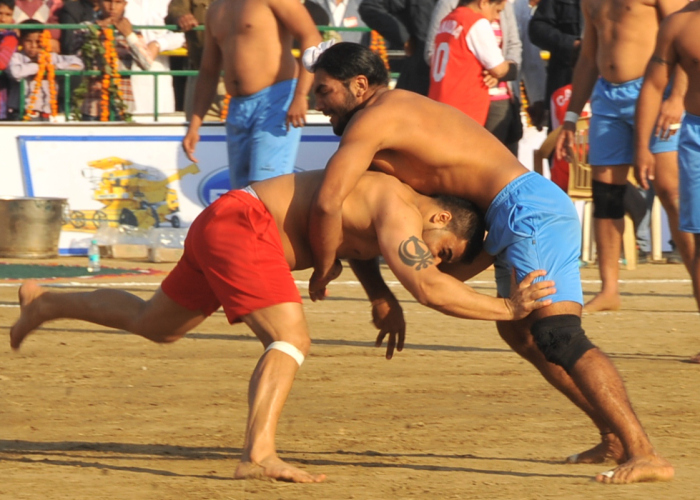
Kabaddi is very famous game of Punjab which is  also known as Kauddi. The term Kabbadi is derived from Kauddi. This game is popular in village areas but nowadays played on international levels as well. the game is played in a flat, rectangular arena 13 meters (42.7 ft) wide x 10 meters (32.8 ft) long and is divided into two equal halves. The Kabbadigame has two teams and each team consists of seven players. A coin is flipped that decides which team will go first. On player from each team face off each other for twenty minutes and try to tag each other and score more points. After halftime, the two teams switch sides of the court. The team with the most points at the end of the game wins. The rural people arrange Kabbadi championships and enjoy playing and watching this game.

Shalwar Kameez, Cultural Costume of Punjab


Shalwar Kameez is a cultural costume of Punjab. It is worn by men and women both but their styles differ by gender. Shalwar and Kameez both are separate garments. Shalwar is basically the trouser which is wide from top and narrow from the ankle. Shalwar is also called Suthan. The Shalwar is of different styles like Patiala, peshawari etc.  Kameez is a shirt of varying lengths can be long and short as well. Kameez is also called Kamees, Kurta and Jhga. It can be cap-sleeved or sleeveless.  This cultural Shalwar Kameez is popular in rural and as well as urban areas and can be worn by people of every age. It is a dress which can be worn in summers and winters both.


Production of Jaggery (Gurh) in Punjab


Jaggery is  traditional sweet of Punjab. It is also known as Gurh. It is prepared by Sugar Cane. It contains the natural goodness, vitamins of Sugar Cane. Sugar Canes are crushed to produce Sugar Cane Juice.

This juice is then filtered. The juice is filtered through cheese cloth and put in large cans. These cans with juice are carried to Bhatti (a fire place). 

Jaggery is usually of golden brown and dark brown color. It can be eaten alone or is mixed with peanuts, coconut or condensed milk. Various kinds of dishes can be prepared with Jaggery. In Punjab rice are made with Jaggery known as ‘ Gurh Walay Chawal’.

Sweet made with Jaggery and Peanut
Jaggery Rice

Lassi, One of the famous drink of Punjab.


Lassi 
is a traditional and best item of Punjabi cuisines. It is popular in hot summer season. It is a natural drink free from artificial flavors and colors. Lassi commonly has two flavors sweet and salty.
Sweet Lassi is made by adding yogurt, water and sugar into a clay pot called Chatti and blended until pure butter can be collected from it. Yogurt is divided into two things after blending. One is Lassi and Second is butter. Lassi is filtered with cheese cloth. This is the real traditional Lassi that is shown above. It can be enjoyed in hot season and is a good refreshing drink.  Nowadays, different fruits like bananas, mangoes and strawberries are added in Lassi to enjoy different flavours.

The salty one is known as ‘kachi lassi’.  This is made by mixing together a glass of water, a little milk and salt according to taste. It is usually drunk to reduce the warm effect of weather and also taken after eating mangoes or meal. 

Lassi is rich in minerals, vitamins and natural nutrients. It has huge nutritional values as it is rich with calcium, fats, lactose, phosphorous and proteins. So it is good for health and helps you to improve your immune system.

Kanchey, Traditional Game of Punjab


Kancha is the traditional game of Punjab. It is played by children (sometimes adults).  It is an outdoor game that is played on the ground. It is played with marbles. These marbles are of different colors and sizes. Most commonly used sized of marble is 0.5 to 1 inch in diameter.


In this game we hit the target marble with own marble. If we hits our target than we will get all marbles in reward. Different games are played with these marbles.


Row, The Juice of Suger Cane


Sugar cane juice is the most famous and popular drink in Punjab.It is known as Row and Ganey Ka Rus. It's demand increases in hot summer weather. It is extracted from sugar canes. It is good for health. It contains high quantity of iron, magnesium, calcium and other electrolytes. It is good for dehydration. Firstly the sugar canes are washed properly and then the outer layer of them is peeled with a sharp knife. Then these sugar canes are cut into small pieces and these pieces are put into machines or blenders and juice is extracted. It helps cure the common cold and other infections and also fight fever as it boosts the body's protein levels. It also prevents the cancer and heart diseases, also good for weight loss. In hot summer seasons we can see many people selling fresh sugar cane juice on road side and in different hotels too.
Suger Cane Fields, Also known as Kamand
Suger Cane Juice making machine in Punjab